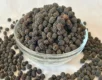
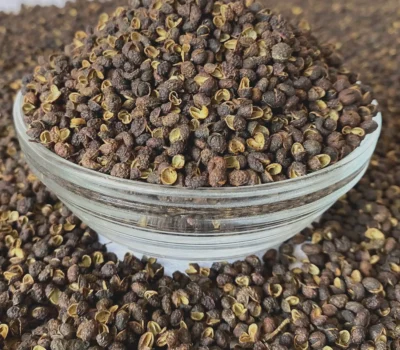
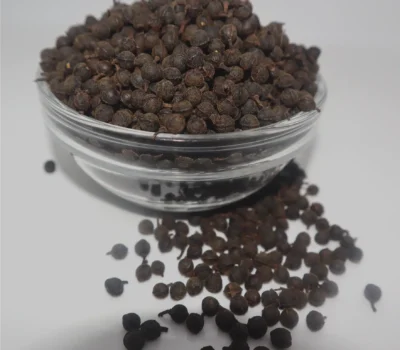
Assam Pepper (Piper mullesua) is an aromatic and lesser-known spice native to the Himalayan region, particularly found in Nepal and Northeast India. It belongs to the Piperaceae family, like black pepper, and is valued for its mild pungency, earthy flavor, and traditional medicinal uses. Locally, it is used as a spice as well as in herbal preparations, especially for digestive and antimicrobial purposes.
There is often some comparison between Assam pepper and common black pepper, as both come from the same plant family. However, their characteristics are quite different. Assam pepper has a softer, more earthy, and herbal taste, while black pepper is known for its strong, sharp pungency. In terms of appearance, both produce small, dark fruits, but Piper mullesua is less uniform and more commonly found in certain conditions. Unlike black pepper, which is widely cultivated and traded globally, Assam pepper is mostly harvested and remains a regionally used spice.
Here are some key facts about Assam Pepper:
- Piper mullesua is a perennial climbing plant that grows naturally in subtropical and temperate forests of the Himalayas, at elevations ranging from 200 to 1400 meters.
- It prefers shaded and humid environments, commonly found under forest canopies, along slopes, and near water sources. The plant grows well in fertile, well-drained soils rich in organic matter.
- Assam pepper is wildcrafted, though small-scale cultivation is practiced in some areas. It is considered an important non-timber forest product (NTFP) in rural communities.
- Flowering generally occurs in the spring season, followed by fruiting in late spring to early summer, when the berries become ready for harvesting.
- The fruits are collected when fully mature and then dried in the shade to preserve their aroma and quality. Proper drying and storage in cool, dry conditions help maintain their value.
- Due to its natural growth habit, the plant contributes to forest biodiversity and supports local livelihoods through sustainable harvesting.
Assam pepper (Piper mullesua) is an aromatic and lesser-known spice native to the Himalayan region, particularly found in Nepal and Northeast India. It belongs to the Piperaceae family, like black pepper, and is valued for its mild pungency, earthy flavor, and traditional medicinal uses. Locally, it is used as a spice as well as in herbal preparations, especially for digestive and antimicrobial purposes.
There is often some comparison between Assam pepper and common black pepper, as both come from the same plant family. However, their characteristics are quite different. Assam pepper has a softer, more earthy, and herbal taste, while black pepper is known for its strong, sharp pungency. In terms of appearance, both produce small, dark fruits, but Piper mullesua is less uniform and more commonly found in certain conditions. Unlike black pepper, which is widely cultivated and traded globally, Assam pepper is mostly harvested and remains a regionally used spice.
Here are some key facts about Assam pepper:
- Piper mullesua is a perennial climbing plant that grows naturally in subtropical and temperate forests of the Himalayas, at elevations ranging from 200 to 1400 meters.
- It prefers shaded and humid environments, commonly found under forest canopies, along slopes, and near water sources. The plant grows well in fertile, well-drained soils rich in organic matter.
- The plant is mainly crafted, though small-scale cultivation is practiced in some areas. It is considered an important non-timber forest product (NTFP) in rural communities.
- Flowering generally occurs in the spring season, followed by fruiting in late spring to early summer, when the berries become ready for harvesting.
- The fruits are collected when fully mature and then dried in the shade to preserve their aroma and quality. Proper drying and storage in cool, dry conditions help maintain their value.
- Due to its natural growth habit, the plant contributes to forest biodiversity and supports local livelihoods through sustainable harvesting.
Major Chemical Constituents:
(can be different in different places)
| Component | Presence |
| Piperine | Major compound |
| Essential oils | Present |
| Alkaloids | Present |
| Flavonoids | Present |
| Terpenes | Less amount |