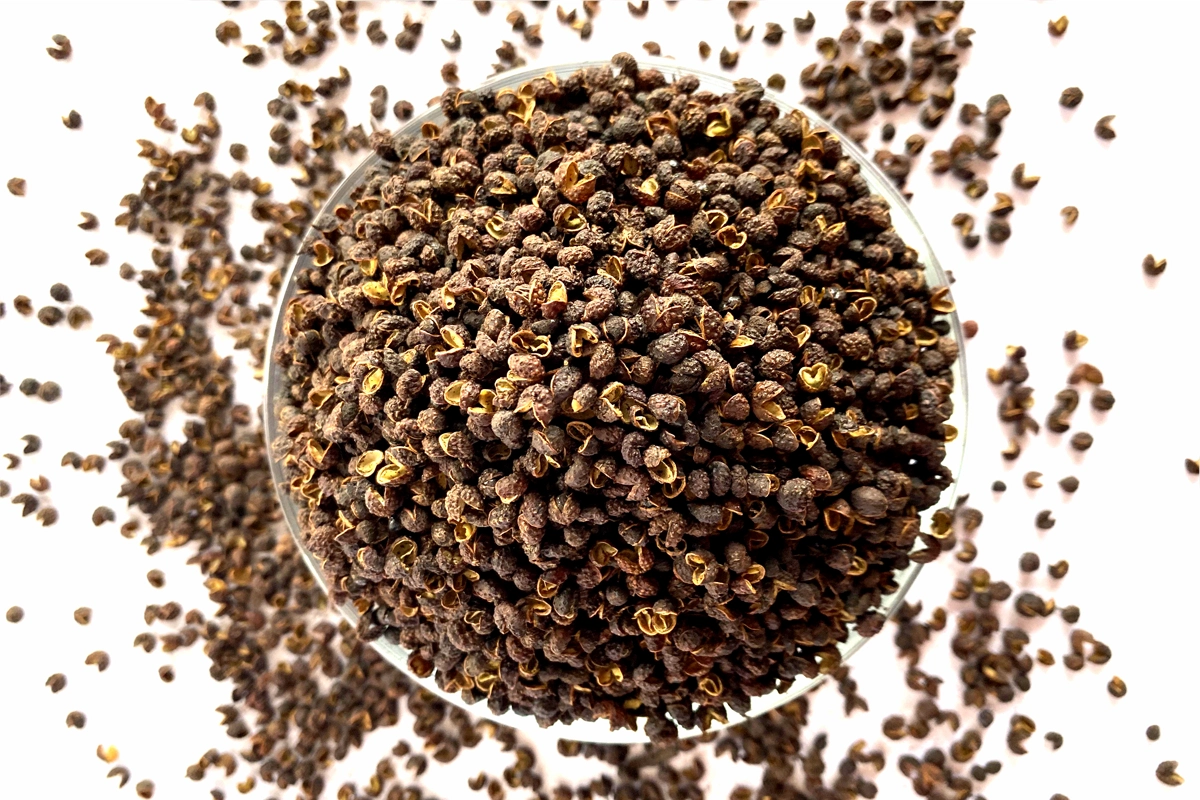
Timur peppercorn (Zanthoxylum armatum) is a fragrant spice native to Southeast Asia, notably Nepal, where it is widely used in culinary dishes, as a taste enhancer, and as a medicinal ingredient. It is a member of the Rutaceae family and is commonly known as a “Sichuan pepper” because of its numbing and tingling impact on the tongue. Timur peppercorn is also used in essential oils for its distinct perfume and medicinal benefits, including antibacterial and anti-inflammatory characteristics.
There is a lot of confusion between the Sichuan pepper and the Timur pepper since both of these peppers have a very similar appearance and come from the same plant family. Both their flavor and their scent, on the other hand, are completely unlike one another. The English language sometimes refers to Timur as prickly ash. It is characterized by a robust lemony scent and a dark brown appearance. On the other hand, Sichuan pepper is characterized by its characteristic reddish color and its floral scent. Among the traits that these two plants have in common, one is their ability to numb the senses.
Here’s a list of details about Timur that you might not be aware of:
Across the Asian continent, the Timur peppercorn, a spiny, semi-deciduous shrub, grows naturally in a variety of environments, including thickets, rain-forests, and open, sloping areas, at altitudes ranging from fifty to two thousand four hundred meters.
There is a wide range of climatic conditions that a Timur tree may thrive in, allowing it to flourish in environments ranging from tropical to temperate. It can reach heights ranging from four to five meters.
Several districts in Nepal cultivate Timur peppercorn, planting it in the under story of lower-altitude thickets. India and a few other countries around the world receive the majority of the crop for use in medical and other therapeutic applications.
During the months of March through June, the timur plant is in its flowering phase. The crucial seeds germinate during the months of July and August.
Timur peppercorn, also known as Timut peppercorn, is a popular food with birds, which are also important contributors to the spread of the plant.
The primary chemical constituents of the plant are as follows:
| Component Category | Key Compounds | Functions / Properties |
|---|
| Alkaloids | Chelerythrine, Berberine | Antimicrobial, antioxidant, anti‑inflammatory, hepatoprotective, cytotoxic, antidiabetic |
| Flavonoids & Phenolics | Quercetin, Kaempferol, Phenolic acids | Antioxidant, antimicrobial, anti‑inflammatory, protective against oxidative stress |
| Terpenoids | Monoterpenes, Sesquiterpenes | Aromatic compounds, gastroprotective, immunomodulatory |
| Essential Oils | Linalool, Limonene, β‑Caryophyllene | Citrus‑like aroma, antimicrobial, neuroprotective, flavor profile |
| Glycosides | Various plant glycosides | Digestive health, antimicrobial activity |
| Tannins | Condensed tannins | Astringent, wound healing, antimicrobial |
| Fatty Acids & Amino Acids | Linoleic acid, Oleic acid, essential amino acids | Nutritional support, metabolic functions |
| Polysaccharides | Plant‑derived polysaccharides | Immunomodulatory, digestive support |