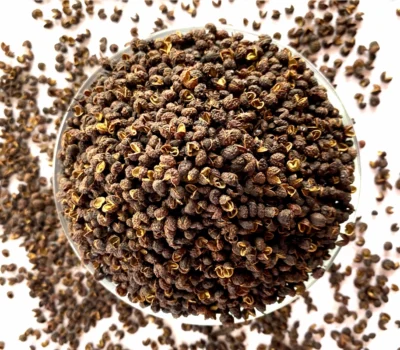
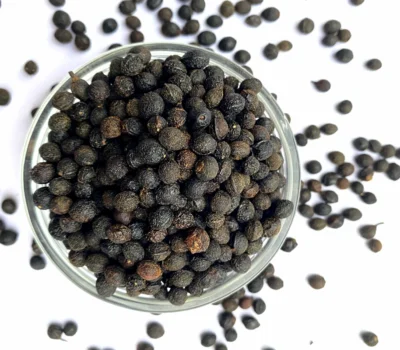
Premium Assam Peppercorn from Himalayan forests

Assam Pepper

Botanical Name Piper mullesua
Common Name Assam Pepper, Wild Assam Pepper
Family Piperaceae
Parts of used Fruits
Distribution 200–1400m
Type of production Wild Crafted
Categories Conventional

Assam Pepper (Piper mullesua), a perennial climbing plant found in the subtropical and temperate forests of the Himalayas. It grows at elevations of about 200 to 1400 meters and is commonly seen in Eastern and Central Nepal (as well as Northeast India). The plant prefers shady and moist environments, such as forest areas, stream sides, and secondary vegetation. It grows best in well-drained, fertile soil rich in organic matter but can also adapt to other soil types if enough moisture is available.

Piper mullesua can be propagated by seeds or stem cuttings. Fresh seeds collected from ripe fruits usually germinate better and are sown in shaded nursery beds. Depending on environmental conditions Germination takes around 3 to 5 weeks, depending on environmental conditions. Seedlings are raised until they reach about 20–30 cm in height, after which they are ready for transplanting. Stem cuttings are another effective method and are best done during the monsoon season, when humidity supports root growth.

Before planting, the land should be well-prepared, clean, and free from weeds. Adding farmyard manure (FYM) helps improve soil fertility and supports better plant growth. As a climbing plant, it requires support from stakes or nearby trees for proper development.

The fruits are harvested when they are fully mature, usually in late spring to early summer. After harvesting, they are dried in the shade to maintain their quality and aroma. The dried fruits can then be used or processed as needed. Proper storage in a cool and dry place is important to preserve their flavor and medicinal value.

Assam Pepper (Piper mullesua) is an aromatic and lesser-known spice native to the Himalayan region, particularly found in Nepal and Northeast India. It belongs to the Piperaceae family, like black pepper, and is valued for its mild pungency, earthy flavor, and traditional medicinal uses. Locally, it is used as a spice as well as in herbal preparations, especially for digestive and antimicrobial purposes.

There is often some comparison between Assam pepper and common black pepper, as both come from the same plant family. However, their characteristics are quite different. Assam pepper has a softer, more earthy, and herbal taste, while black pepper is known for its strong, sharp pungency. In terms of appearance, both produce small, dark fruits, but Piper mullesua is less uniform and more commonly found in certain conditions. Unlike black pepper, which is widely cultivated and traded globally, Assam pepper is mostly harvested and remains a regionally used spice.

Here are some key facts about Assam Pepper:

  • Piper mullesua is a perennial climbing plant that grows naturally in subtropical and temperate forests of the Himalayas, at elevations ranging from 200 to 1400 meters.
  • It prefers shaded and humid environments, commonly found under forest canopies, along slopes, and near water sources. The plant grows well in fertile, well-drained soils rich in organic matter.
  • Assam pepper is wildcrafted, though small-scale cultivation is practiced in some areas. It is considered an important non-timber forest product (NTFP) in rural communities.
  • Flowering generally occurs in the spring season, followed by fruiting in late spring to early summer, when the berries become ready for harvesting.
  • The fruits are collected when fully mature and then dried in the shade to preserve their aroma and quality. Proper drying and storage in cool, dry conditions help maintain their value.
  • Due to its natural growth habit, the plant contributes to forest biodiversity and supports local livelihoods through sustainable harvesting.

Assam pepper (Piper mullesua) is an aromatic and lesser-known spice native to the Himalayan region, particularly found in Nepal and Northeast India. It belongs to the Piperaceae family, like black pepper, and is valued for its mild pungency, earthy flavor, and traditional medicinal uses. Locally, it is used as a spice as well as in herbal preparations, especially for digestive and antimicrobial purposes.

There is often some comparison between Assam pepper and common black pepper, as both come from the same plant family. However, their characteristics are quite different.  Assam pepper has a softer, more earthy, and herbal taste, while black pepper is known for its strong, sharp pungency. In terms of appearance, both produce small, dark fruits, but Piper mullesua is less uniform and more commonly found in certain conditions. Unlike black pepper, which is widely cultivated and traded globally, Assam pepper is mostly harvested and remains a regionally used spice.

Here are some key facts about Assam pepper:

  • Piper mullesua is a perennial climbing plant that grows naturally in subtropical and temperate forests of the Himalayas, at elevations ranging from 200 to 1400 meters.
  • It prefers shaded and humid environments, commonly found under forest canopies, along slopes, and near water sources. The plant grows well in fertile, well-drained soils rich in organic matter.
  • The plant is mainly crafted, though small-scale cultivation is practiced in some areas. It is considered an important non-timber forest product (NTFPs) in rural communities.
  • Flowering generally occurs in the spring season, followed by fruiting in late spring to early summer, when the berries become ready for harvesting.
  • The fruits are collected when fully mature and then dried in the shade to preserve their aroma and quality. Proper drying and storage in cool, dry conditions help maintain their value.
  • Due to its natural growth habit, the plant contributes to forest biodiversity and supports local livelihoods through sustainable harvesting.

Major Components of Assam Pepper (Piper mullesua)

(can be different in different places)

Category Key Compounds Functional Properties
Alkaloids Piperine (dominant), other nitrogenous alkaloids Enhances nutrient absorption, digestive aid, anti‑inflammatory
Essential Oils Volatile oils (terpenes, sesquiterpenes) Aroma, antimicrobial, respiratory relief
Flavonoids Quercetin, Kaempferol Antioxidant, cardiovascular protection, anti‑inflammatory
Lignans Plant‑derived polyphenols Antioxidant, liver support, potential anti‑cancer activity
Terpenes Monoterpenes, Sesquiterpenes Contribute pungency, antimicrobial, anti‑inflammatory
Phenolic Compounds Phenolic acids Antioxidant, antimicrobial, supports cellular health
Other Alkaloids Minor bioactive alkaloids Stimulate metabolism, analgesic properties


Assam pepper, commonly known as Himalayan pepper, is a mildly pungent and aromatic spice with several traditional uses and benefits. Piper mullesua is valued not only for its flavor but also for its role in local medicine and livelihoods.

Many local and traditional Himalayan dishes use Assam Pepper as a spice. Its dried fruits have a mild, earthy taste with a slightly herbal aroma, which enhances foods like soups, meat preparations, and traditional recipes.

In traditional practices, different parts of Piper mullesua are used for medicinal purposes:

  • It is believed to support digestion and relieve stomach discomfort.
  • It may have antimicrobial properties, helping to protect against minor infections.

The plant also contains natural compounds that may help reduce inflammation, making it useful in traditional remedies for body aches and minor illnesses.

Assam Pepper contains aromatic compounds and essential oils, which contribute to its flavor and potential therapeutic value. These are sometimes used in traditional preparations and herbal applications.

The plant plays an important role in the forest ecosystem, helping maintain biodiversity in Himalayan regions. As a climbing species, it grows along trees and supports natural vegetation balance.

It also contributes to local livelihoods, as it is often collected from the forest and sold as a non-timber forest product. Sustainable harvesting of Piper mullesua can provide income for rural communities.

In addition, Assam pepper holds cultural importance in some Himalayan areas, where it is used in traditional food practices and local knowledge systems.

For Medicinal Use:

Assam pepper (Piper mullesua) is traditionally used in local herbal practices for its potential health benefits. It is believed to help with digestive problems, such as indigestion, stomach pain, and loss of appetite. In some traditional systems, it is also used to relieve coughs, colds, and minor respiratory issues.

The plant is thought to have antimicrobial and anti-inflammatory properties, which may help in managing minor infections and body discomfort. It is sometimes used as a natural stimulant, supporting circulation and overall body function.

Different parts of the plant are used in traditional remedies. The fruits are commonly consumed or processed, while other parts may be used in local preparations depending on the region. In some areas, it is also used in simple home remedies for maintaining general health.

For Cooking Purposes:

Assam pepper is used as a local spice in Himalayan cuisine. It has a mild, earthy, and slightly pungent flavor, making it suitable for enhancing traditional dishes. It is often added to soups, meat dishes, pickles, and local curries.

Unlike black pepper, its flavor is less sharp, which allows it to blend well with other ingredients without overpowering the dish. It is mainly used in traditional and regional cooking, rather than in large-scale commercial food production.

For Other Reasons:

Assam pepper also plays a role in local livelihoods, as it is collected from forests and sold as a non-timber forest product (NTFP). Sustainable harvesting of this plant helps support rural communities.

The plant contributes to forest biodiversity, growing naturally in shaded environments and supporting ecological balance. As a climbing plant, it can also be maintained in agroforestry systems.

In some areas, the plant is valued for its natural origin and traditional importance and is sometimes grown or protected for its usefulness and cultural value.

Please enable JavaScript in your browser to complete this form.
Testimonials

Our Clients' Experiences, Feedback and Stories

Posted on Google Google
Zoltán Marosán profile picture
Zoltán Marosán
Google star 1Google star 2Google star 3Google star 4Google star 5Trustindex verifies that the original source of the review is Google.
Excellent products, a reliable seller
Posted on Google Google
Chhiring 2016 profile picture
Chhiring 2016
Google star 1Google star 2Google star 3Google star 4Google star 5Trustindex verifies that the original source of the review is Google.
I have a toddler and her skin is hyper sensitive nothing really works on her skin and modern medicine gives her skin more irritation rather than relief. Trust me I tired everything. Suffer for whole year. Thank god somehow, I came to know about Bassia (chiuri butter) now I even use for my new born. Modern medicine is full of side effect and god knows what else. I tried hard to buy shea butter in Nepal but later I knew we have something similar in our land. Nature provides you best medicine.
Posted on Google Google
Asha Distributions LLC profile picture
Asha Distributions LLC
Google star 1Google star 2Google star 3Google star 4Google star 5Trustindex verifies that the original source of the review is Google.
We received outstanding quality Timur Pepper, Sil Timur Pepper, and Assam Pepper. The products exceeded our expectations in freshness, aroma, and quality. Their customer service was prompt, professional, and reliable. We are very happy with our experience and look forward to doing business again. All the best !
Posted on Google Google
vincent lacoste profile picture
vincent lacoste
Google star 1Google star 2Google star 3Google star 4Google star 5Trustindex verifies that the original source of the review is Google.
Very good quality and authenticity, perfect conversation quality
Posted on Google Google
Vanilla Lab profile picture
Vanilla Lab
Google star 1Google star 2Google star 3Google star 4Google star 5Trustindex verifies that the original source of the review is Google.
We were pleased to find such a reliable supplier. The spices are aromatic and of good quality. Delivery was organized properly and arrived on time, with all documents completed correctly. It was a pleasant experience and we look forward to continuing our cooperation.