

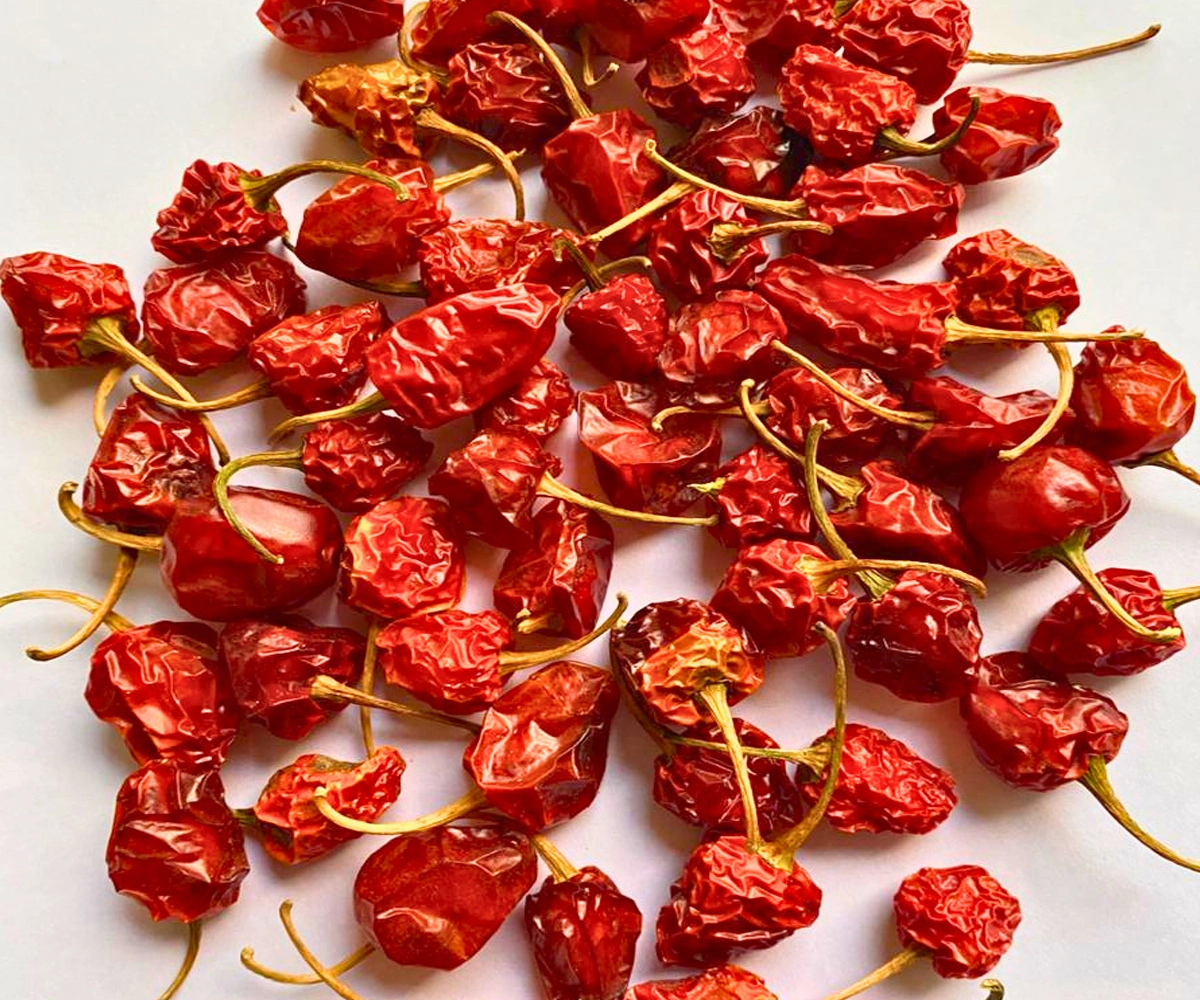

Akabare Chilies scientifically known as Capsicum annuum is a well-known round chili and an important spice and cash crop. The plant grows best at altitudes of 900 to 2,000 meters above sea level. It thrives in the cool, humid mid-hill climate of Nepal, where temperatures are moderate, and soils are fertile, slightly acidic, and well-drained. Most production occurs in the eastern and central mid-hill regions, especially in districts such as Ilam, Dhankuta, Panchthar, Taplejung, Sankhuwasabha, Bhojpur, Kavrepalanchok, Sindhupalchok, Dolakha, and Ramechhap, which are known for producing high-quality Dalle or Akabare Khursani.
Farmers cultivate Akabare Khursani at specific elevations because the crop requires cool temperatures and high humidity for proper growth and fruit development. These conditions help the chili develop its strong pungency, fruity aroma, and thick fleshy pods. The crop is commonly grown in kitchen gardens and small commercial farms, often inter-cropped with maize, ginger, or turmeric, and sometimes under light tree shade to protect plants from intense sunlight and to conserve soil moisture.
Nepal is one of the main producers of Akabare Khursani, and the chili has become an important income source for hill farmers. Many households depend on its cultivation for selling fresh chilies, pickles (achar), dried chilies, and chili powder. Traditional farming methods are widely practiced, focusing on environmentally friendly and sustainable cultivation suited to fragile hill ecosystems.
Harvesting usually takes place from July to October, when the fruits turn bright red or orange. The chilies are marketed fresh, sun-dried, pickled, or processed into paste and powder. Nepali Akabare Khursani is valued for its intense heat and distinctive flavor, contributing to the agricultural economy while supporting sustainable farming in steep hillside areas.


