

Black Turmeric – Rare • Healing • Heritage
Nestled within the forests and hilly landscapes of Nepal grows one of nature’s rare medicinal treasures, black turmeric. Distinct from the common yellow turmeric used in everyday cooking, black turmeric is known for its deep bluish-black rhizome, strong earthy aroma, and long-standing place in traditional healing practices. For generations, local communities and traditional healers have valued this unique plant for natural remedies, cultural rituals, and indigenous knowledge preserved through time.
Today, black turmeric is gaining recognition beyond traditional use. Its medicinal properties, antioxidant compounds, and rising demand in herbal wellness have drawn attention to its potential in both health and sustainable agriculture. In Nepal, where farming and nature remain connected, the cultivation of black turmeric reflects a balance between environmental preservation, rural livelihoods, and traditional wisdom.
More than just a medicinal plant, black turmeric reflects how closely Nepali communities still live with nature. In rural areas, people have used it for generations for healing, local traditions, and farming. Today, as interest in herbal products and sustainable farming grows, black turmeric is slowly gaining attention again.
WHAT IS BLACK TURMERIC?
Black turmeric (Curcuma caesia) is a rare medicinal plant from the ginger family (Zingiberaceae) known for its dark bluish-black rhizome and distinctive camphor-like aroma. Unlike common yellow turmeric widely used in cooking, black turmeric has traditionally been valued more for herbal practices, cultural importance, and traditional wellness uses.
This unique plant naturally grows in warm, humid, and forested regions across parts of South and Southeast Asia. In Nepal, hilly and biodiversity-rich areas, where local communities still preserve traditional farming systems and indigenous plant knowledge, are the primary habitats for this species.
For generations, black turmeric has been associated with Ayurvedic traditions and local herbal remedies. Even though black turmeric is still rare compared to normal turmeric, more people are becoming interested in it because of its traditional medicinal uses and growing demand for herbal products. In Nepal, it is still mostly known in rural communities and among people familiar with medicinal plants.
Black Turmeric- Botanical identity
Black Turmeric is scientifically known as Curcuma caesia. It belongs to the same botanical family as ginger and common turmeric but differs significantly in appearance, aroma, and traditional uses.
Botanical Classification
Kingdom: Plantae
Family: Zingiberaceae
Genus: Curcuma
Species: Curcuma caesia
The plant is a perennial herb with underground rhizomes, broad green leaves, and pale-colored flowers that bloom during the growing season.
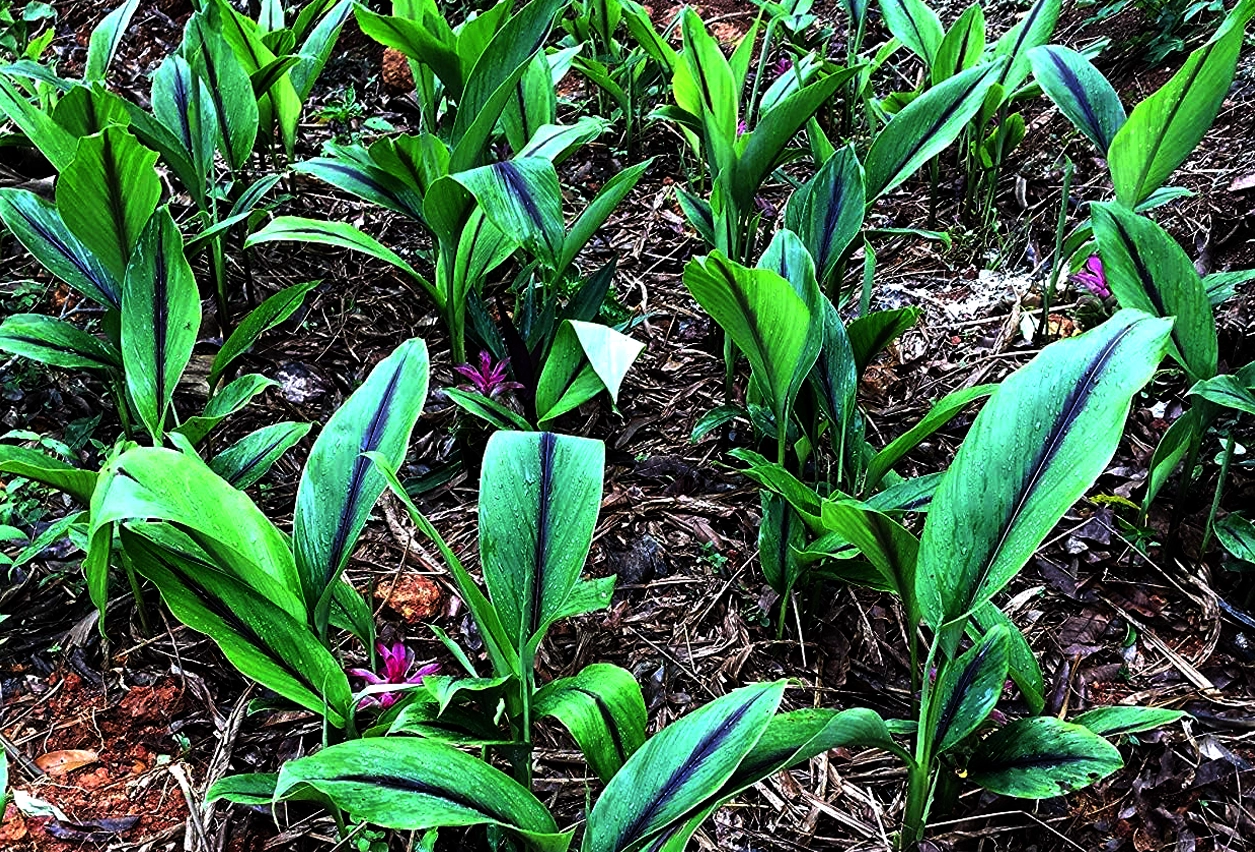
Among all parts of the plant, the rhizome is considered the most valuable because of its traditional medicinal importance and unique natural properties.
PHYSICAL APPEARANCE OF BLACK TURMERIC IN NEPAL
Black Turmeric found in Nepal is visually distinct from common yellow turmeric due to its dark bluish-black rhizome and strong camphor-like aroma. The plant has broad, lush green leaves and grows as a perennial herb in moist, shaded forest and hilly regions, giving it a distinctive medicinal and tropical appearance.
Rhizome (Underground Stem)
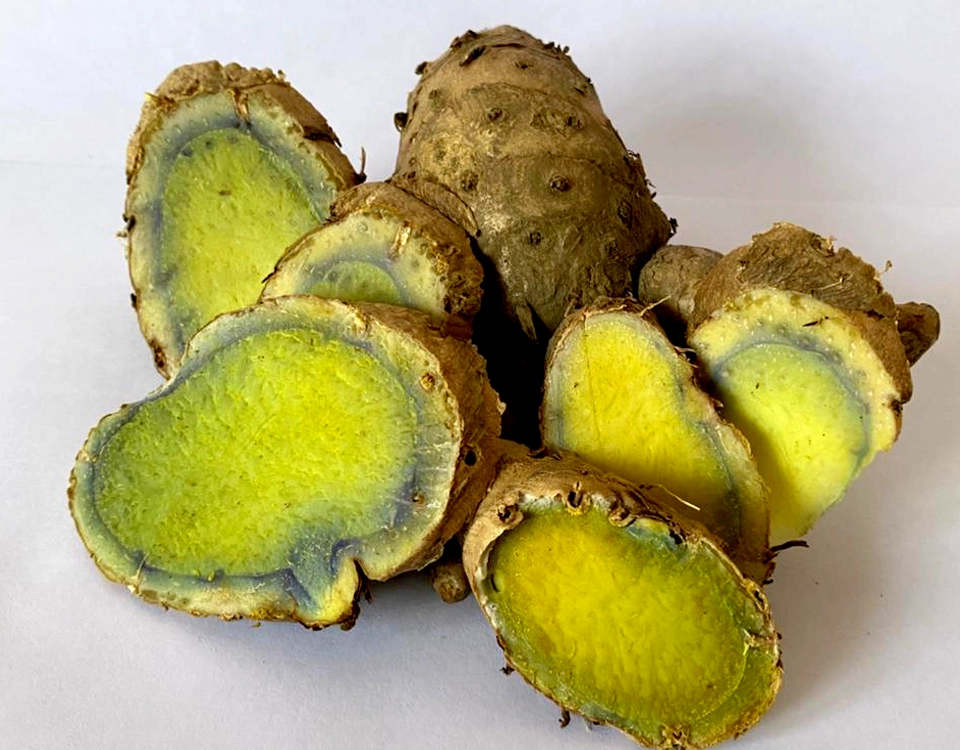
The rhizome is the most recognizable part of the plant. It has a rough, deep brown to grey outer covering, while the inner flesh is deep bluish-black or violet-black. When freshly cut or broken, it releases a strong camphor-like aroma, making it one of the most distinctive identifying features in forested and hilly regions.
Leaves
The leaves are broad, smooth, and deep green, growing upright from the base of the plant. In shaded environments, they may show a faint purple or reddish midrib. These lush leaves help the plant thrive in warm, humid, and moist soil conditions.
Flowers
Flowering is rare but when it occurs, the flowers are pale pink, light purple, or whitish in color. They grow on short spikes near the base of the plant and are often partially hidden by surrounding green bracts and leaves.
Plant Habit
Black turmeric is a medium-sized perennial herb that grows in warm, humid, and shaded forest habitats. It prefers moist, fertile soil and typically grows in hilly regions. Its combination of dark rhizomes, aromatic properties, and lush foliage gives it a distinctive medicinal plant appearance.
HOW BLACK TURMERIC DIFFERS FROM YELLOW TURMERIC
Although black turmeric and yellow turmeric belong to the same plant family, they feel like two completely different plants once you look closer.
Color and Appearance
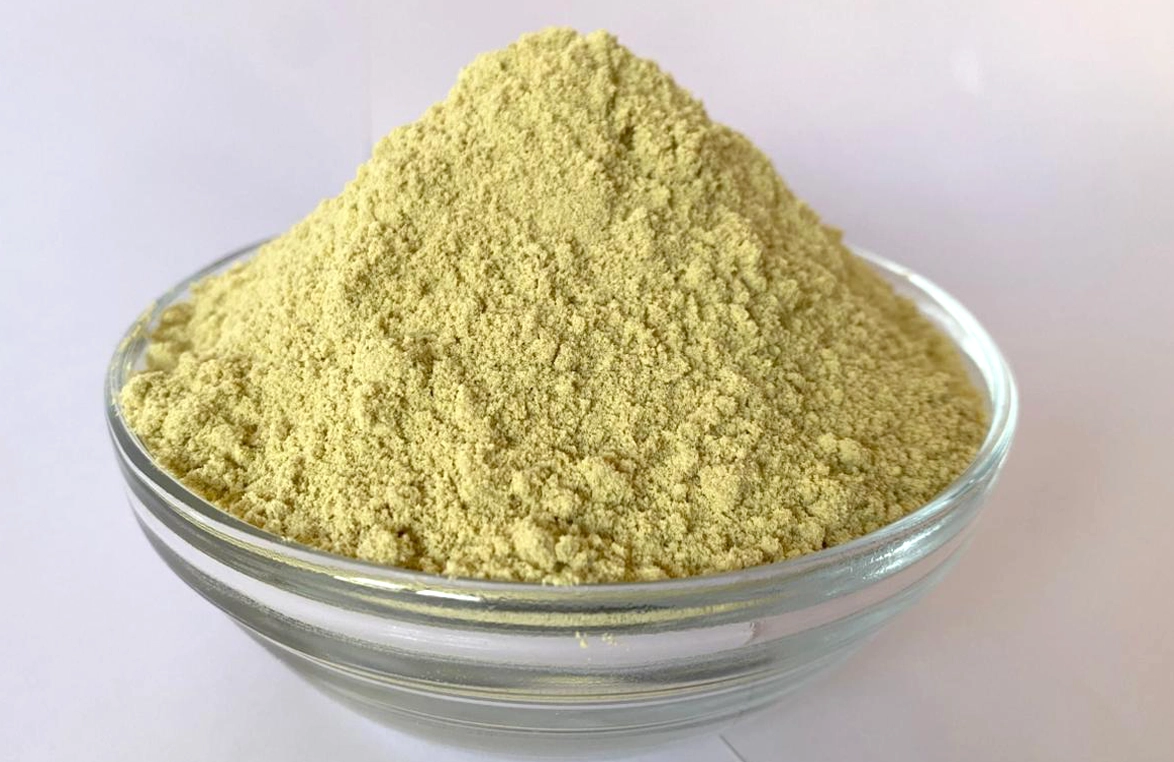
The first thing you notice is what is inside the rhizome. Yellow turmeric has that familiar bright golden/orange color we see in the kitchens. Black turmeric, on the other hand, is surprising and has dark bluish-black core that almost looks unusual compared to anything used in cooking.
Aroma
Their smell is also quite different. Yellow turmeric has a warm, mild earthy scent. Black turmeric is much stronger and sharper, with a camphor-like aroma that feels more medicinal than culinary.
Uses
In everyday life, yellow turmeric is a kitchen essential used in cooking, coloring, and home remedies. Black turmeric is rarely used in food. Instead, it is mostly linked to traditional healing practices, herbal medicine, and cultural or spiritual uses in certain communities.
Availability
Yellow turmeric is widely grown and easy to find in markets. Black turmeric is much rarer. It grows in limited forest and hilly regions and is usually cultivated on a small scale, often preserved by traditional farming communities.
ORIGIN AND NATURAL HABITAT IN SOUTH ASIA
Black turmeric originally comes from the warm tropical and subtropical regions of South and Southeast Asia. It naturally grows in places that have countless moisture, good rainfall during the monsoon season, fertile soil, and areas that are not exposed to direct harsh sunlight, usually under partial shade.
In Nepal, black turmeric is found in mid-hill regions and near forest areas where the environment is rich in biodiversity. Conditions such as cool shade, humid air, and nutrient-rich soil helps medicinal plants like black turmeric grow well. Similar natural growing conditions can also be seen in countries like India, Bangladesh, and other parts of the Himalayan region, where forests and hills provide a suitable habitat for such rare plants.
IDEAL GROWING CONDITIONS OF BLACK TURMERIC
Black turmeric grows best in places where nature is still rich and untouched. It prefers warm, humid conditions; soft, well-drained soil, and land that depends on rainfall rather than heavy irrigation. You will often find it in semi-shaded forest areas and hilly regions where biodiversity is high.
Black Turmeric grows best in warm and humid places with soft soil and partial shade. Hilly and forest-side regions in Nepal predominantly exhibit these conditions. Since the plant depends heavily on natural environmental balance, farmers usually grow it using traditional and low-chemical farming methods. Its presence shows how deeply local communities have stayed connected to nature for generations. Protecting plants like black turmeric is not only about saving a medicinal herb but it is also about preserving traditional knowledge, farming practices, and the natural heritage that people have carefully passed down over time.
TRADITIONAL AND CULTURAL IMPORTANCE IN NEPAL
In Nepal, Black Turmeric carries a deep cultural and spiritual significance that has been passed down through generations. Found in the mid-hill forests and rural landscapes, it has long been associated with traditional healing practices, household remedies, and local belief systems that connect people closely with nature.
Traditional Healing Practices
In rural communities, Black Turmeric is valued as a “healing root” used by traditional healers (locally known as dhami-jhankri) to treat various ailments such as inflammation, pain, and respiratory issues. Even though modern medicine is now widely available, households still respect and occasionally rely on herbal knowledge when dealing with minor health problems. This reflects a deep-rooted trust in nature-based healing that remains part of Nepal’s cultural identity.
Spiritual and Ritual Beliefs
Beyond medicine, Black Turmeric also holds a place in spiritual and ritual practices. It is believed to carry protective energy and is sometimes used in rituals to ward off negative influences or bring good fortune. While these beliefs vary from place to place, they highlight how closely natural plants are tied to cultural faith and everyday life in Nepal.
Traditional Agricultural Knowledge
Another important aspect is its connection to traditional agricultural knowledge. For generations, farmers in forest-edge communities have observed its growth patterns, preserved its habitat, and passed down informal knowledge about when and where it thrives. This reflects a lifestyle where biodiversity conservation was not a separate concept, but a natural part of living in balance with the environment.
Modern Relevance and Conservation Value
Today, as interest in medicinal plants is growing again, Black Turmeric is being revalued not just as a cultural symbol, but also as an opportunity for sustainable livelihood and conservation. Yet, its true importance still lies in the way it represents a living link between Nepal’s forests, traditional wisdom, and cultural heritage.
MEDICINAL PROPERTIES OF BLACK TURMERIC
Black turmeric contains curcuminoids, essential oils, and antioxidants that are linked to its traditional medicinal value. In Ayurveda and folk medicine, it is commonly used for supporting digestion, relieving joint and muscle pain, improving respiratory health, and treating minor skin conditions. These benefits are based on long-standing traditional knowledge and ongoing scientific interest, and it should not replace modern medical treatment.
CULTIVATION OF BLACK TURMERIC IN NEPAL
Although black turmeric is rare compared to common turmeric, Nepal’s diverse geography offers suitable conditions for its cultivation. The Himalayan foothills and mid-hill regions provide an environment that supports the growth of medicinal and aromatic plants.
Suitable Climate and Soil Conditions
Black turmeric grows well in warm humid climates with moderate rainfall and good soil moisture. The crop grows best in fertile loamy soil rich in organic matter, which supports healthy rhizome development.
Partial shade environments are considered ideal because excessive direct sunlight may affect soil moisture levels. In Nepal, Himalayan hill regions naturally provide such conditions through forest edges, agroforestry systems, and mixed farming landscapes.
The suitability of Nepal’s hill ecology makes black turmeric an interesting option for sustainable medicinal farming in mountain areas.
Traditional Farming Practices
Traditional farming systems in Nepal often rely on organic farming methods and indigenous agricultural knowledge. Farmers historically cultivated medicinal plants alongside cereals, vegetables, and fruit trees within mixed farming systems.
Black turmeric cultivation in rural communities frequently depends on natural compost, farmyard manure, and locally available organic materials instead of heavy chemical fertilizers. These Eco-friendly methods help maintain soil fertility and preserve biodiversity.
Indigenous agricultural knowledge also plays a significant role in selecting planting seasons, maintaining soil moisture, and preserving planting rhizomes for future cultivation cycles.
Planting, Irrigation and Farm Maintenance
Black turmeric is propagated through rhizomes. Farmers select healthy rhizome sections and plant them before the monsoon season when soil moisture conditions become favorable.
Water management is important during the early growth period. While the crop requires consistent moisture, excessive water-logging can damage the rhizomes. Traditional irrigation methods often rely on natural rainfall combined with simple water channel systems.
Regular weed removal and soil care practices help maintain healthy plant growth. Farmers also use mulching techniques to preserve soil moisture and reduce weed competition naturally.
Harvesting and Post-Harvest Handling
The harvesting season begins after the leaves dry and mature, indicating that the rhizomes are ready for collection. Farmers carefully remove the rhizomes from the soil to avoid physical damage.
After harvesting, black turmeric is washed, sliced, and dried using traditional preservation techniques. Sun drying remains common in rural areas, although controlled drying methods may improve product quality for commercial purposes.
Proper storage is essential because moisture can damage medicinal rhizomes. Traditionally, farmers stored dried black turmeric in cool and dry conditions using earthen containers, cloth bags, or wooden storage systems.
WHY BLACK TURMERIC REMAINS FORGOTTEN IN NEPAL?
Despite its traditional importance, black turmeric remains unknown in Nepal’s mainstream agricultural and herbal sectors.
Limited Commercial Cultivation
One major reason is the limited scale of cultivation. Most farmers grow black turmeric in small quantities for household use or local traditional practices rather than large commercial production.
Low production levels have reduced market visibility, making the crop less competitive compared to widely cultivated agricultural products. As a result, consumers are unaware of black turmeric’s existence and cultural importance.
Lack of Awareness and Scientific Research
Limited public knowledge has also contributed to the neglect of black turmeric cultivation. Younger generations are unfamiliar with indigenous medicinal plants and traditional herbal practices.
There is also a need for stronger involvement from research institutions to document the plant’s agricultural characteristics, traditional uses, and economic potential. Lack of scientific documentation and organized promotion has slowed broader recognition.
Competition with Commercial Cash Crops
Farmers often prefer high-income commercial crops that provide faster economic returns. Crops such as vegetables, tea, cardamom, and fruits frequently receive greater market support and investment.
This shift toward commercial agriculture has contributed to the decline of indigenous medicinal farming systems, including black turmeric cultivation.
Threats from Habitat Loss and Over-harvesting
Deforestation and biodiversity loss have reduced the natural habitats where medicinal plants traditionally thrived. Unsustainable harvesting practices in forest areas also threaten the survival of rare medicinal species.
Without proper conservation efforts, black turmeric may face further decline in both cultivated and wild environments.
Black Turmeric and Sustainable Himalayan Agriculture
As interest in sustainable agriculture grows, black turmeric represents more than just a medicinal plant. It symbolizes the connection between biodiversity, indigenous knowledge, and environmentally responsible farming.
CHALLENGES IN BLACK TURMERIC FARMING IN NEPAL
Black turmeric farming in Nepal is gaining attention because of its medicinal value and market potential. But for farmers, the reality on the ground is more complicated than the hype.
Limited practical knowledge
There is still no established guide or standardized method for black turmeric farming. Because of this, farmers are unable to rely on proven practices and instead they depend on field-level experimentation. They adjust techniques, make decisions based on observation, and correct mistakes as challenges arise during cultivation.
Poor availability of planting material
Farmers often struggle to access high-quality rhizomes for planting. As a result, they end up using whatever is available (sometimes weak or mixed-quality material) which directly affects germination rates and leads to lower yields.
Long waiting period
Black turmeric is not a crop that gives quick returns. It takes around 8–10 months to reach harvest, which means farmers must wait a full growing cycle before seeing any income. For small farmers in Nepal who rely on seasonal earnings to support their families, this long waiting period can feel financially heavy. During this time, money goes into labor, care, and maintenance, but nothing comes back until harvest by making it a risky choice compared to faster-growing crops.
Unstable market
One of the biggest challenges with black turmeric farming in Nepal is the lack of a stable market system. Farmers do not have a guaranteed buyer or a fixed price for their produce. Instead, they often depend on middlemen, whose rates can vary widely, or on shifting export demand that they have little control over. Because of this uncertainty, farmers go into each season without knowing the income they will make. This unpredictable market situation makes it difficult to plan and adds a layer of financial risk to an already long growing cycle.
Climate and soil sensitivity
Black turmeric is quite sensitive to soil and climate conditions. It grows best in well-drained, loose soil with balanced moisture, but Nepal’s weather (heavy monsoon rains or dry winter spells) can easily disturb its growth. Poor drainage can cause rhizome rot, while lack of moisture can slow development. Because of this, even minor changes in local conditions can have a significant impact on yield, making it a risky crop to manage consistently.
Although black turmeric has potential, but in Nepal it is still an emerging crop in Nepal.
IMPORTANCE OF INDIGENOUS MEDICINAL CROPS
Indigenous medicinal crops help preserve native plant diversity and traditional crop systems that have supported Himalayan communities for centuries.
Cultivating black turmeric encourages sustainable agriculture by promoting locally adapted crops that require fewer chemical inputs and support ecological balance.
Organic and Eco-Friendly Farming Practices
Black turmeric aligns naturally with organic and eco-friendly farming systems. Farmers can cultivate the crop using reduced chemical dependency and natural cultivation methods.
Environment-friendly agriculture not only protects soil and water resources but also increases the value of herbal products in organic markets.
Climate-Resilient Farming in Mountain Regions
Indigenous crops such as black turmeric often show better adaptation to hill environments and changing climatic conditions. Their resilience can support sustainable mountain agriculture where fragile ecosystems require careful land management.
Diversifying farming systems with medicinal crops may also reduce agricultural risks for small farmers in mountainous regions.
Preservation of Traditional Agricultural Knowledge
The cultivation of black turmeric depends heavily on inter-generational farming knowledge and indigenous sustainability practices.
Community involvement remains essential for preserving local seed systems, traditional cultivation techniques, and cultural relationships with medicinal plants. Protecting this knowledge is equally important as protecting the crop itself.
POTENTIAL OF BLACK TURMERIC IN NEPAL’S HERBAL ECONOMY
Nepal possesses rich medicinal plant diversity, and black turmeric could become part of the country’s growing herbal economy.
Growing Demand for Medicinal Plants
Global consumer interest in herbal wellness products and natural remedies has increased significantly in recent years. Herbal wellness industries continue to expand as people seek plant-based and Eco-friendly alternatives.
This trend creates opportunities for Nepalese medicinal crops with traditional and cultural value.
Opportunities for Rural Farmers and Cooperatives
Black turmeric may offer high-value crop potential for small farmers and cooperatives interested in medicinal plant cultivation.
Community-based enterprises focused on cultivation, drying, packaging, and local processing could strengthen rural economies while preserving indigenous agriculture.
Value Addition Through Herbal Products
There are opportunities to develop value-added products such as powders, oils, herbal wellness products, and traditional medicinal preparations.
Proper branding, quality control, and organic certification could further increase market potential for Nepalese herbal products.
Future Export Potential of Nepalese Medicinal Herbs
International demand for organic herbal products continues to grow. Nepal’s identity as a Himalayan country rich in medicinal plants may strengthen export opportunities for sustainably produced herbal goods.
BLACK TURMERIC AND SUSTAINABLE DEVELOPMENT GOALS (SDG) IN NEPAL
Black turmeric farming can help rural communities earn additional income while also encouraging the protection of local plant diversity and traditional farming practices. Since the crop can be grown using organic and low-chemical methods, it fits naturally with the small-scale farming systems already common in many hill regions of Nepal.
In many villages, families are participated in different stages of cultivation, from planting and caring for the crop to drying and storing the rhizomes after harvest. Women especially play a key role in preserving medicinal plant knowledge and handling post-harvest work. This can create opportunities for small local businesses, cooperatives, and community-based herbal enterprises while also helping preserve traditional knowledge connected to medicinal plants.
MODERN RESEARCH AND GLOBAL INTEREST
Scientific Research on Medicinal Compounds
Research on black turmeric focuses on its antioxidant properties, curcuminoids, essential oils, and other bioactive compounds linked to traditional medicinal use.
Rise of Organic Wellness Industries
Growing interest in herbal wellness and sustainable products has increased demand for naturally cultivated black turmeric and other medicinal plants.
Combining Traditional Knowledge with Science
Researchers are now studying black turmeric more closely to understand the compounds inside it and how they relate to its traditional uses in herbal medicine.
Researchers are also exploring how traditional medicinal plants like black turmeric can be used responsibly in modern herbal industries without harming biodiversity.
CAN BLACK TURMERIC BECOME NEPAL’S NEXT HIGH-VALUE MEDICINAL CROP?
Black turmeric has strong potential to become a valuable medicinal and economic crop in Nepal due to growing interest in herbal wellness and organic farming. Its cultivation may support rural livelihoods, sustainable agriculture, and the development of Nepal’s herbal sector.
Potential for Sustainable Commercial Farming
Black turmeric can be grown in Nepal using natural and organic farming methods. The hill regions already have the right climate, so farmers can cultivate it without heavy chemicals. This can help them earn more income in a sustainable way.
Challenges in Large-Scale Production
Even though it has potential, growing black turmeric on a large scale is not easy. People do not know about it, farmers do not get enough training, planting material is limited, and it is difficult to find a strong market to sell it.
Importance of Ethical and Sustainable Cultivation
If black turmeric farming increases, it should be done carefully. Farmers should protect nature, avoid over-harvesting, and respect traditional knowledge. This helps keep the plant and environment safe for the future.
Future Opportunities for Nepal’s Herbal Sector
With proper research and sustainable farming practices, black turmeric can become part of Nepal’s herbal industry. It can help create new business opportunities and support Eco-friendly agriculture.
Conclusion !
Black turmeric (Curcuma caesia) is still an unknown medicinal plant in Nepal, but its importance is slowly being recognized again. For rural communities, it is connected to traditional healing practices, local farming knowledge, and cultural beliefs that have existed for generations.
As interest in herbal products and organic farming continues to grow, black turmeric may create new opportunities for farmers and Nepal’s herbal industry. However, its future depends on sustainable cultivation, proper awareness, and the protection of both diversity and traditional knowledge.
Rather than seeing black turmeric only as a commercial crop, it is also important to understand its cultural and environmental value within Nepal’s Himalayan communities.
Frequently Asked Questions (FAQs)
For what is black turmeric used?
Black turmeric is traditionally used in Ayurveda and folk medicine for digestion, pain relief, respiratory support, and skin-related treatments.
What is the scientific name of black turmeric?
The scientific name of black turmeric is Curcuma caesia.
How is black turmeric different from yellow turmeric?
Black turmeric has a dark bluish-black rhizome and strong camphor-like aroma, while yellow turmeric is golden in color and commonly used as a spice in cooking.
Where is black turmeric found in Nepal?
It is found in the mid-hill regions and forested areas with warm, humid, and shaded environments.
Can black turmeric be cultivated commercially in Nepal?
Yes, it has potential for commercial cultivation, especially in hill regions, but it requires awareness, proper market systems, and sustainable farming practices.
Is black turmeric scientifically proven as medicine?
Its medicinal properties are still being researched. It contains bio-active compounds, but most uses are based on traditional knowledge and should not replace modern medical treatment.
Why is black turmeric considered a forgotten plant in Nepal?
Because of low awareness, limited farming, habitat loss, and preference for commercial cash crops, it has remained underutilized.
What is the importance of black turmeric in Nepal’s economy?
It can support rural income, herbal industries, organic farming, and export opportunities if properly developed.


